Insights
The $4 Million Sitting in Your Hangar
Most corporate aircraft carry little or no debt — and that trapped equity is the least productive capital the company owns. A sale-leaseback puts it back to work.
By Kyle O'Donnell · 2026-08-04
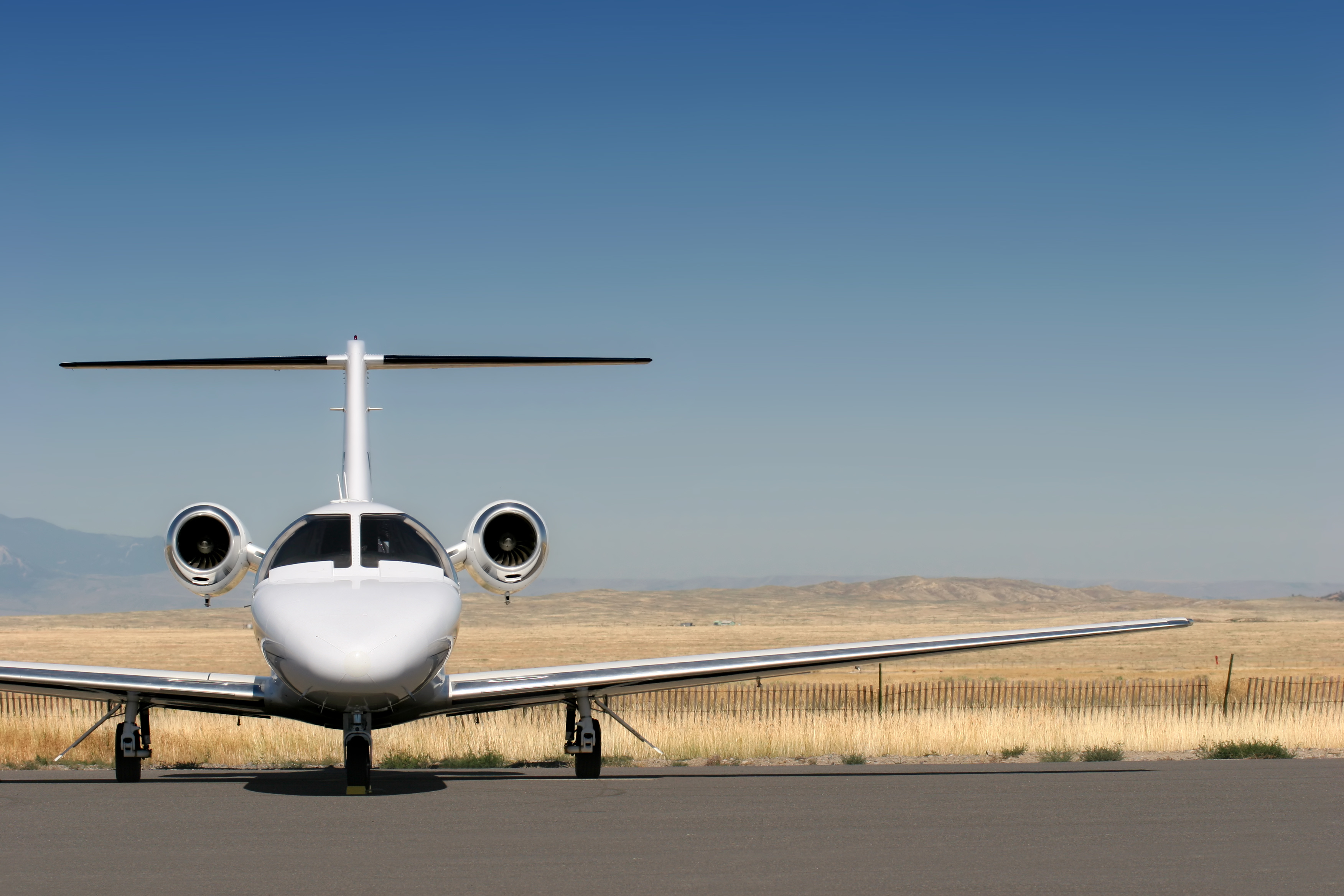
Walk any ramp at a regional airport with a decent FBO and you can do the math from the fence line. The 2008 Challenger 300 that's been with the same operating company since delivery. The XLS that came off a fractional card and has been flying the same principal for nine years. The King Air 350 the medical group bought in cash because the CFO didn't want to deal with the bank. Every one of those aircraft is a capital position — and in most cases, it's the least productive capital the company owns.
Secured Research analysis of business aircraft ownership among middle-market operating companies found that 68% of corporate-operated and owner-flown aircraft carry either no debt at all or a balance below 30% of current retail value. Cross-reference that against fleet values and the numbers get large fast: on a typical light-to-midsize corporate aircraft, that's $2.5 million to $6 million in equity per tail. Aggregate it across the U.S. fleet of roughly 15,000 business jets and several thousand corporate turboprops, and Secured Research estimates north of $40 billion in unlevered aircraft equity sitting in American hangars — earning, by definition, nothing.
The most expensive capital in your client's company is usually parked in the hangar, and nobody's ever priced it.
The Opportunity Cost Nobody Runs
Every business that owns an aircraft monitors direct operating costs to the decimal. Fuel burn, engine program accruals, crew, insurance, hangar. What almost nobody runs is the cost of the equity itself. A company holding $4 million of unlevered value in its aircraft while its core operations return 18% on deployed capital is forfeiting roughly $720,000 a year. Over a five-year hold, that's $3.6 million of foregone value creation — which, on most mature airframes, exceeds the depreciation the aircraft will actually experience over the same window. The aircraft isn't the expensive part. The idle equity is.
Secured Research found that middle-market companies surveyed reported weighted average returns on internally deployed capital between 14% and 22%, against an effective return on aircraft equity of zero before store-of-value arguments and negative after them. When capital is that mispriced inside a company, someone should be arbitraging it. A sale-leaseback is the mechanism.
What the Structure Actually Does
Mechanically, it's clean. The operating company sells the aircraft to Elevex at market. Established off current retail comps, spec-adjusted for engine program status, records quality, and configuration, not off a book value and leases it back under a structure engineered around hold horizon, annual hours, upgrade intentions, and the company's tax position. Same tail number, same crew, same schedule, same hangar. What changes is that the equity comes off the ramp and goes back to work.
With 100% bonus depreciation restored for qualifying acquisitions, the ability to absorb ownership benefits has real value — and not every operator can absorb them. Companies carrying forward losses, sitting in an investment phase, or bumping against passive activity and excess business loss limitations often capture a fraction of the theoretical benefit of owning. Secured Research analysis found that a meaningful share of aircraft owners realized less than half the available tax value of ownership within the first three years. A lessor who can use those benefits efficiently can price that efficiency into the lease rate. That's real savings that these borrowers cannot capture.
Where the Capital Goes: The Data
Secured Research tracked capital deployment among companies executing aircraft sale-leasebacks and found three dominant destinations: 41% into core business expansion — facilities, capacity, market entry; 27% back into the aircraft itself; and 19% into acquisitions, with the balance to debt reduction and shareholder purposes. The 27% is the number brokers and sales professionals should sit with, because it changes what you can sell.
Consider what reinvestment in the aircraft actually looks like on an 18-year-average fleet. A full paint and interior, connectivity upgrades install, or modernizing avionics typically run from $400,000 to $1,200,000. These are exactly the checks that owners defer for years because writing them out of operating cash feels discretionary. Funded from the aircraft's own trapped equity through a sale-leaseback, the decision makes sense.
And the disposition data says that's how it should be. Secured Research analysis of secondary-market transactions found that midsize aircraft with updated interiors, current connectivity, and modernized flight decks moved off the market roughly 40% faster than comparable serial numbers in original configuration, and captured price premiums that recovered, and in the stronger vintages exceeded, the cost of the work. Everyone in the industry has seen the other side of it: the aircraft with the 2006 interior and no Wi-Fi that sits for 300 days while everything around it trades. The refurbishment pays twice: once in utility during the hold, once at exit.
The Objections
The first objection is never financial. It's the title certificate. Owners, particularly first-generation entrepreneurs who bought the aircraft as a marker of what they built, equate registration with control. But control lives in the operations, not the registry. A properly engineered structure preserves full operational autonomy, keeps the aircraft on the owner's certificate arrangements, and defines the end-of-term options at inception: purchase at a pre-agreed residual, renew, or return. The owner who wants a path back to title gets one, priced on day one rather than negotiated at the mercy of a future market.
The second objection is timing. 'I'll look at it when the market's right to sell.' That misreads the transaction. A sale-leaseback is not a disposition; it's a recapitalization. The company keeps the aircraft, keeps the mission, and keeps optionality on ownership. The relevant market isn't the aircraft market at all. It's the return differential between equity parked on the ramp and capital deployed in the business. And for most operating companies, that differential has rarely been wider.
A True Win-Win
For the aircraft owner investment flows back into their business or aircraft, for the business aviation industry, transactions are created. The owner who 'isn't a seller' becomes a client when the conversation shifts from disposing of the aircraft to unlocking it. The upgrade candidate who can't justify the completion budget out of operating cash becomes a buyer of the work when the aircraft funds itself. And the acquisition client stretching to the next airframe finds the equity for the step-up sitting in the one they already own. This is real business and builds trusted clients for MROs, brokers, managers, and more.
The Bottom Line
Every operating company audits its cost of capital annually. Almost none audit the hangar. For businesses generating real returns on deployed capital, the aircraft is frequently the largest pool of accessible, low-friction funding they've never touched — available through a financing structure engineered around how the aircraft actually serves the business, by people who understand what the asset is worth and why.
The $4 million is already theirs. The only question is how long it keeps sitting there.
Most lenders finance assets. We engineer outcomes.
Kyle O'Donnell leads Business Aviation Finance at Elevex Capital. Reach him directly: kodonnell@elevexcapital.com | 404-889-2536
Elevex Capital | elevexcapital.com
Stop waiting on financing decisions
Get equipment financing built around outcomes, not assets. Talk to an expert today.